AI film · Guardian · 2026
The aisle ritual
A concept film for Guardian Express Click & Collect, made with generative AI. It names a small frustration that every beauty shopper knows, and then makes it disappear. This page covers the idea, the prompts, and the generation that failed and taught me the most.
Film · Click & Collect
Date night. One lipstick shade. Every shade but hers.
Client
Guardian Singapore
Product
Guardian Express Click & Collect
Status
Concept
My role
Concept, AI direction, edit and post
Tools
Seedance 2.0 on Higgsfield, Claude, After Effects
Year
2026
The idea
Insight
Health and beauty is exact-item shopping. You aren’t looking for a lipstick, you are looking for your shade, your SPF or your formula. So every store trip follows the same ritual. You look up, you look down, you crouch, and then you ask the staff, who offer to check the back. You already know how it ends. The fear isn’t that the store is out of stock. It’s that it’s out of yours.
Platform
Guardian, confirmed. It is the only way to shop that tells you the item is there before you go.
Proposition
Order on the app, and your item is confirmed, reserved and waiting at your chosen Guardian in as little as an hour. There is no ritual, no gamble and no wasted trip.
Big idea
Name the ritual, then end it. The film plays the aisle ritual out beat by beat, and every line is written in the second person, so each shopper sees themselves doing it. The answer isn’t a better search. It is never having to search at all: know it’s there before you are.
The script
There is no dialogue in the film. The story is carried by supers that speak directly to the viewer, one beat of the ritual at a time. That choice came out of a failed generation, which is covered further down the page.
Put the camera where no camera goes
The shot sits inside the shelf and looks out through the gap between two shelf levels. The shelf becomes a letterbox, and her search plays out inside it.
Lock the camera and move the person
The camera never moves. When she looks up, her face leaves the frame, and when she crouches, it drops back into the gap. The frame itself tells you what she is doing.
Keep the light ordinary
The prompt asks for flat, bright retail light and forbids a moody grade. Beautiful light would turn this into a lipstick ad instead of a familiar problem.
Character and location
The shopper is built the same way as the characters in my MSIG films: a locked reference sheet and a text description that goes into every prompt word for word. The store reference is used only for materials, fixtures and light, and the prompt tells the model not to copy its camera angle.
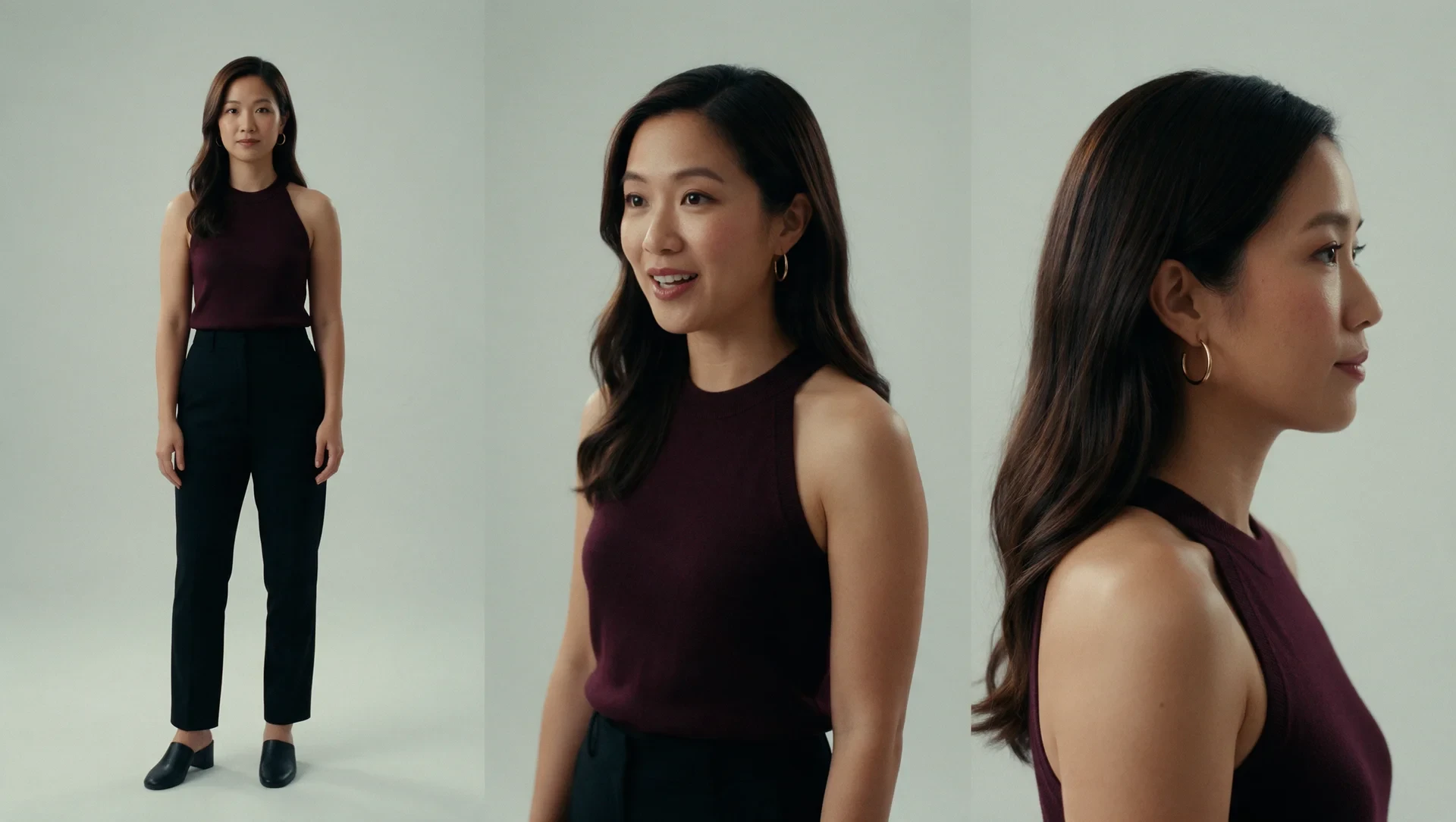
The shopper. Front, three-quarter and profile views on one sheet.
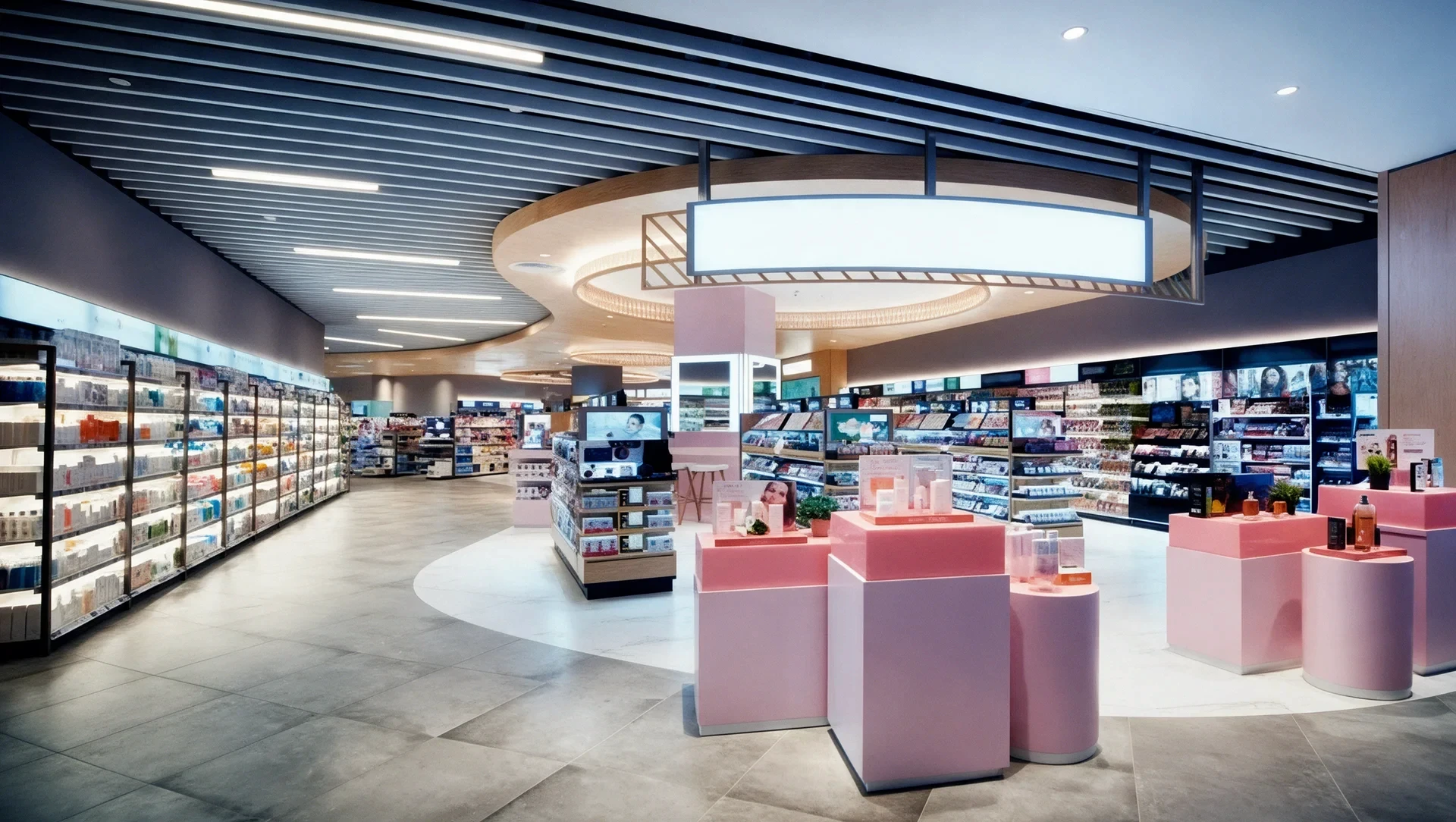
The store reference, used for materials, fixtures and light only.
Prompting
The video prompt describes a single twelve-second take with one continuous action. It spells out who is in the frame, where the camera is, what the lens does, what happens every two seconds, how the light should look and what should be heard. You can copy the full prompt below.
Decisions inside the prompt
One action, timed to the second
The search is broken into two-second beats: scanning, looking up, looking down, crouching, checking one carton and putting it back. Each beat has room to land.
Describe everyone in the frame
The prompt says she is the only person whose face is legible, that the few background shoppers are Singaporean, and that no staff member appears. Nothing is left for the model to guess.
Silence is written, not assumed
It states that she does not speak and her lips stay still. The story moved into supers, so no mouth has to match a line.
Ban the brand, not the look
All packaging is plain and unreadable, so no real product or competitor shows up on the shelf.
What didn’t work
My first attempt tried to fit the whole story into ten seconds. The camera followed her down the aisle, she crouched and went through the ritual, and then she turned to a staff member who said, “Let me check the back.” It didn’t work, and the way it failed shaped the final film.
The failed generation. Watch the shopper’s mouth when the staff member speaks.
Too much action for the time
A follow shot, a crouch, the search and a conversation were all packed into one ten-second clip. Every beat felt rushed and none of them landed.
Both characters said the line
The prompt didn’t make clear enough who speaks, so the shopper and the staff member both mouthed “Let me check the back”.
The shopper drifted
She came out as a Western woman. I hadn’t pinned down her ethnicity firmly enough, so the model filled the gap with its default.
The fix was to do less. The final film uses one locked shot, one action and twelve seconds. The staff member and the dialogue were cut, and the words moved into supers. Her ethnicity, and the ethnicity of everyone in the background, is now stated in the character sheet and again in the video prompt.
What I took away
01
Give each shot one action. When a model has too much to do in ten seconds, it does all of it badly.
02
If a line of dialogue could belong to two people, the model will often give it to both.
03
Anything you don’t specify gets filled with the model’s default, so describe every person in the frame, including the ones in the background.
04
A failure can improve the idea. Moving the words into supers turned an ordinary scene into a direct address to the viewer.
Concept, AI direction, edit and post by Farhan Haniff. A concept for Guardian Singapore.